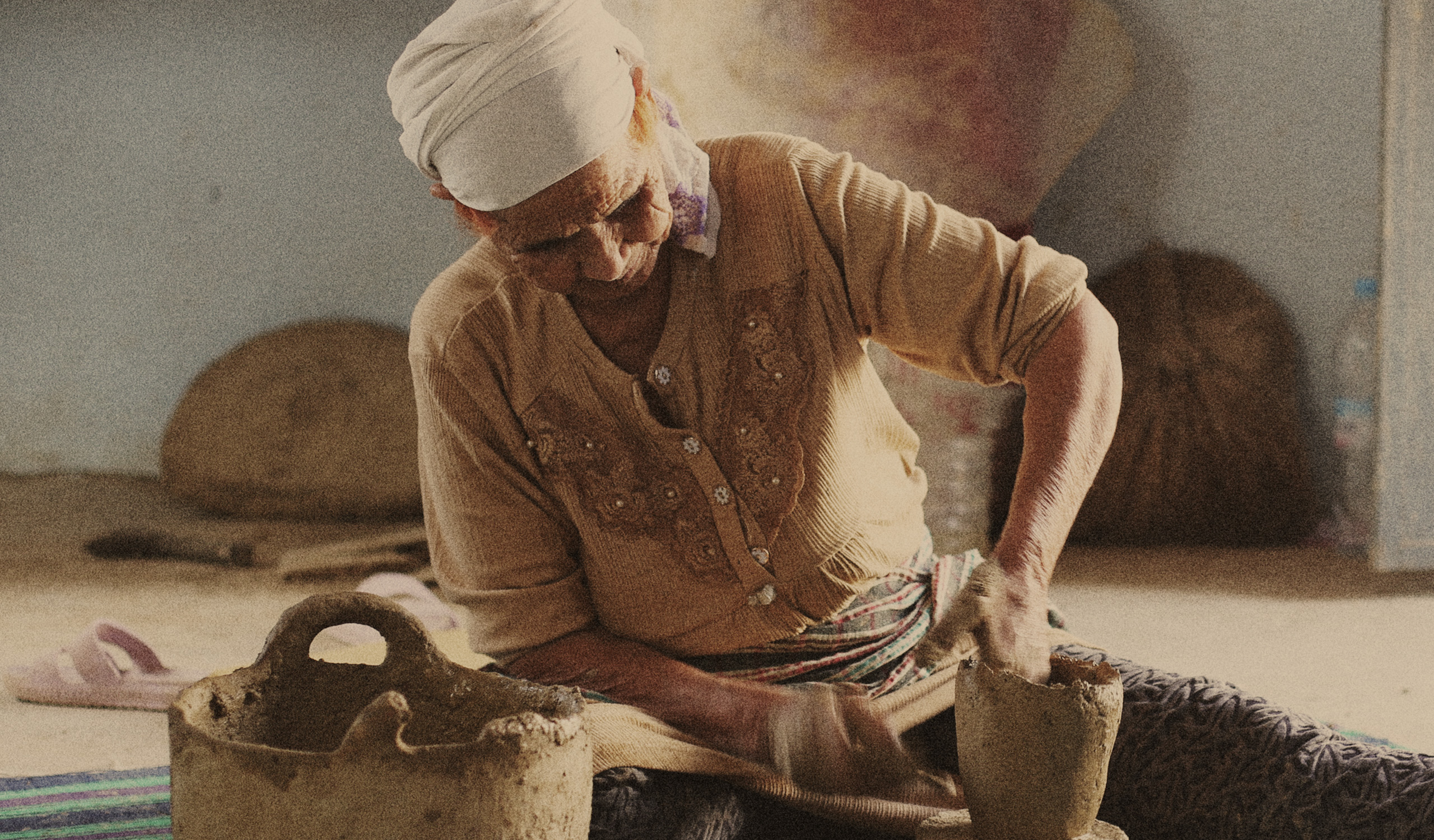
Female rifian potteryimmersion
Participants from around the world engage in the full process of a traditional craft while living daily life alongside our family and local villagers.
For thousands of years, the women of Morocco’s Rif Mountains have been the guardians of an extraordinary craft, shaping clay into pieces that were both essential to daily life and profound expressions of cultural identity.
In every family across the region, one girl was chosen to learn from her mother, absorbing the skills needed to create the pottery the household required.
These pieces were never made simply for decoration. They cooked stews, stored grains, and carried water. Yet in the hands of Rifian women, utility became beauty; every vessel was alive with patterns and symbols, painted with local pigments to form a visual language that transcends function.
What makes this tradition remarkable is its elemental simplicity and physical demands.
The women gather all their materials from the surrounding landscape and work with the humblest of tools. Rifian potters rely on only a few implements: a knife, smoothing stones, and sometimes a wooden mallet.
The clay is fired in open-air pits, fueled by wood shavings or animal dung, a process that demands strength, precision, and ancestral knowledge passed down through generations.
Today, however, urbanization, changing lifestyles, and the spread of cheap plastic have eroded the demand for traditional pottery, leaving very few female potters and many women struggling to sustain their craft.